Why Your Kid Loves Percy Jackson But Gets Poor English Grades
A child can devour a favorite series and still struggle with assigned reading. Background knowledge, engagement, and text familiarity help explain why.
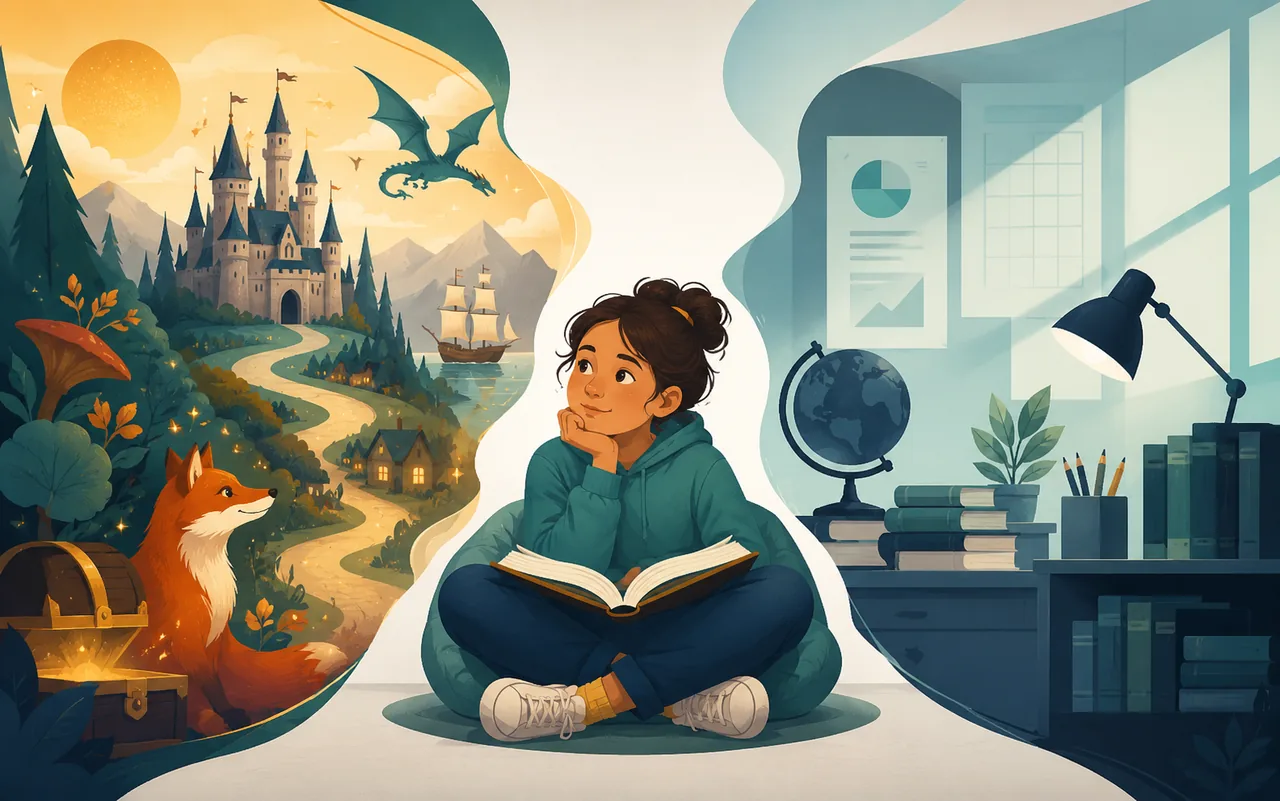
Does your child get middling English grades, but happily read Percy Jackson, The Hunger Games, or The Fault in Our Stars? They can binge their favorite series, but avoid the reading assignment from English class.
Is that just because those books are fun and Fahrenheit 451, or whatever assigned classic is on the list, feels old and boring?
Well, yes. Part of the answer really is that some books are more immediately engaging for a modern reader than others.
Both The Hunger Games and Fahrenheit 451 are dystopian novels about futures where a government seeks overwhelming control. One is about a man who burns books for the state. The other is about gladiatorial games turned into a televised spectacle. One of those premises is simply more accessible to many young readers.
That does not mean assigned books are worthless. It does mean that engagement, context, and prior knowledge matter more than most reading assignments admit.
The Engagement Factor Is Real
According to reading research and common sense, people, including children, prefer to read things that feel interesting, relevant, and understandable. They also tend to connect more easily with characters, settings, and problems that feel close enough to their own world.
"Reading engagement is more important than students' family background consisting of parents' education and income. Reading engagement connects to achievement more strongly than to home environment."
John Guthrie, Professor Emeritus, Reading Research Center, University of Maryland
A lot of school reading has become something students endure. English class often emphasizes sophisticated fiction and literary history, while students look for summaries because the assigned reading feels distant from the way they actually read outside school.
The Liberal Arts Education Problem
The situation comes partly from the history of liberal arts education. If someone is studying English literature in college, reading Frankenstein because it helped shape science fiction makes sense. Moving piece by piece through the history of an art form lets teachers introduce ideas, movements, and techniques as they developed.
Film students watch Citizen Kane because it changed what film could do with narration, structure, and perspective. After watching earlier films, the shift becomes obvious.
In that kind of context, Fahrenheit 451 may be a richer work of fiction than The Hunger Games. It can have deeper themes, hidden meanings, and more complex diction.
But for a young reader who is still building reading confidence, that does not automatically make it the better practice text. Reading historical fiction trains a reader to read historical fiction. It does not automatically train them to understand The Atlantic, a research paper, a science article, or anything else outside that domain.
The Science of Reading: Two Separate Skills
Context, background information, and familiarity matter a lot. To simplify the science of reading, when we read we are doing two things at once:
- Recognizing and decoding the words on the page.
- Understanding what those words mean inside a larger context.
This is often discussed through the Simple View of Reading. Reading depends on both word recognition and language comprehension. These are related, but they are not the same skill.
That is why Shakespeare can feel difficult even when the words are technically English. Style, background knowledge, references, and topic familiarity all affect comprehension. Someone from the sixteenth century might also struggle with a modern book about baseball analytics, not because they cannot decode words, but because the world behind the text would be unfamiliar.

The Baseball Study
One famous reading study is Effect of Prior Knowledge on Good and Poor Readers' Memory of Text, published in the Journal of Educational Psychology in 1988. It is often called the baseball study because it showed how much topic knowledge can change comprehension.
The study separated students into four groups: strong readers who knew baseball, strong readers who did not know baseball, weaker readers who knew baseball, and weaker readers who did not know baseball. Then students read a passage about baseball and were tested on what they understood.
The students who knew baseball scored higher across the board.
The results were exactly what you would expect if background knowledge matters. The students who knew baseball understood the baseball passage better. The biggest factor was not just general reading level. It was baseball knowledge.
More Recent and Robust Evidence
More recent work points in the same direction. A 2023 randomized controlled trial, Longitudinal Randomized Trial of a Sustained Content Literacy Intervention from First to Second Grade, followed 2,275 students in grades 1 and 2 across 30 elementary schools.
One group received a content literacy intervention that built knowledge over time. Another group continued with the standard instruction. At the end, students were tested on reading comprehension of scientific material.
Students in the content-rich program performed better, especially on topics related to what they had learned. They also retained more knowledge across the summer. The lesson is important: background knowledge is not a trick. It is a framework that lets reading skills operate.
The Critical Flaw in Traditional Approaches
Background knowledge clearly matters, but it is also domain specific. Knowledge about one area helps most when the text is about that area. Reading Fahrenheit 451 can help a student get better at a certain kind of literary reading. Reading The Hunger Games can help a student move quickly through modern young adult fiction. Neither automatically prepares the student to understand a dense article about economics, science, or foreign policy.
That is the flaw in both common extremes. Schools cannot just assign difficult classics and assume the struggle builds general literacy. Families also cannot simply replace every hard text with a familiar favorite and call the problem solved.
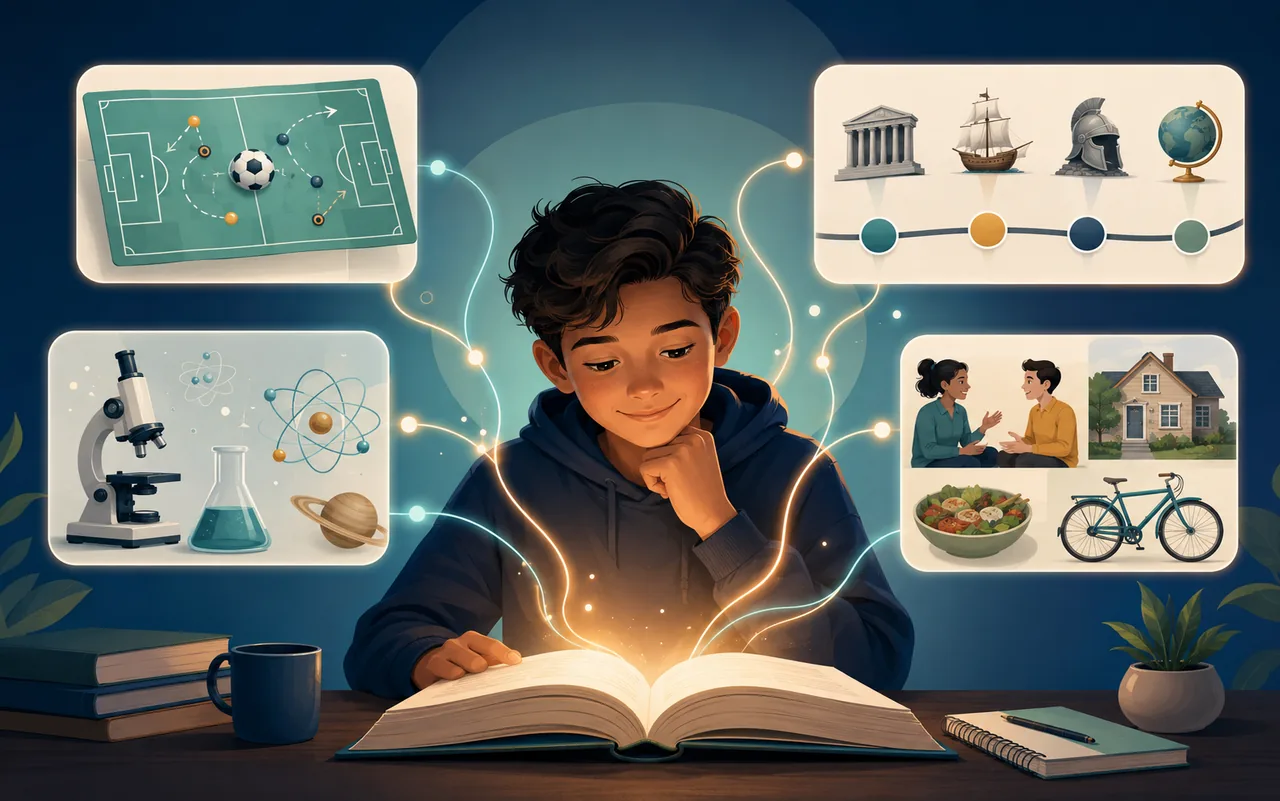
To become a stronger reader, a child has to become a more knowledgeable person. They need practice with words, but they also need more knowledge about the world those words describe.
What Do We Do With This Information?
It depends on the goal. If the goal is to help a child get better grades on assigned reading, they should probably build context before they read. A good summary video, teacher introduction, or discussion that explains the historical setting, themes, and major ideas can make the actual text far more comprehensible.
That can feel like a shame because it may spoil the story. But if the assignment is already functioning more like literary history than pleasure reading, the trade-off may be worth it.
If the goal is bigger than grades, the answer is to help the child read more widely in areas that matter to them and challenge them. If they love science, push toward science writing. If they love music, sports, engineering, nature, or history, help them read material that builds real knowledge in that world.
Understanding what you read is often less about a secret technique and more about understanding the subject itself.
The Bullet Point Summary
- A child may read favorite books more easily because those books are more engaging and more familiar.
- Reading comprehension depends on both word reading and language comprehension.
- Background knowledge can dramatically affect whether a reader understands a text.
- Building broad knowledge matters more than forcing every reader through disconnected hard texts.
- Before assigned reading, context can help. For long-term growth, help readers build knowledge in areas that genuinely interest them.
Written by
Founder perspective
Co-Founder & CTO
Augustine Summe
Augustine leads the technology behind Dr. Read's voice-first reading experience and shares a deep passion for democratizing high-quality reading support.